EP 1 | What Does Good Mean In Fiber Construction

Click Here To Listen to The Episode
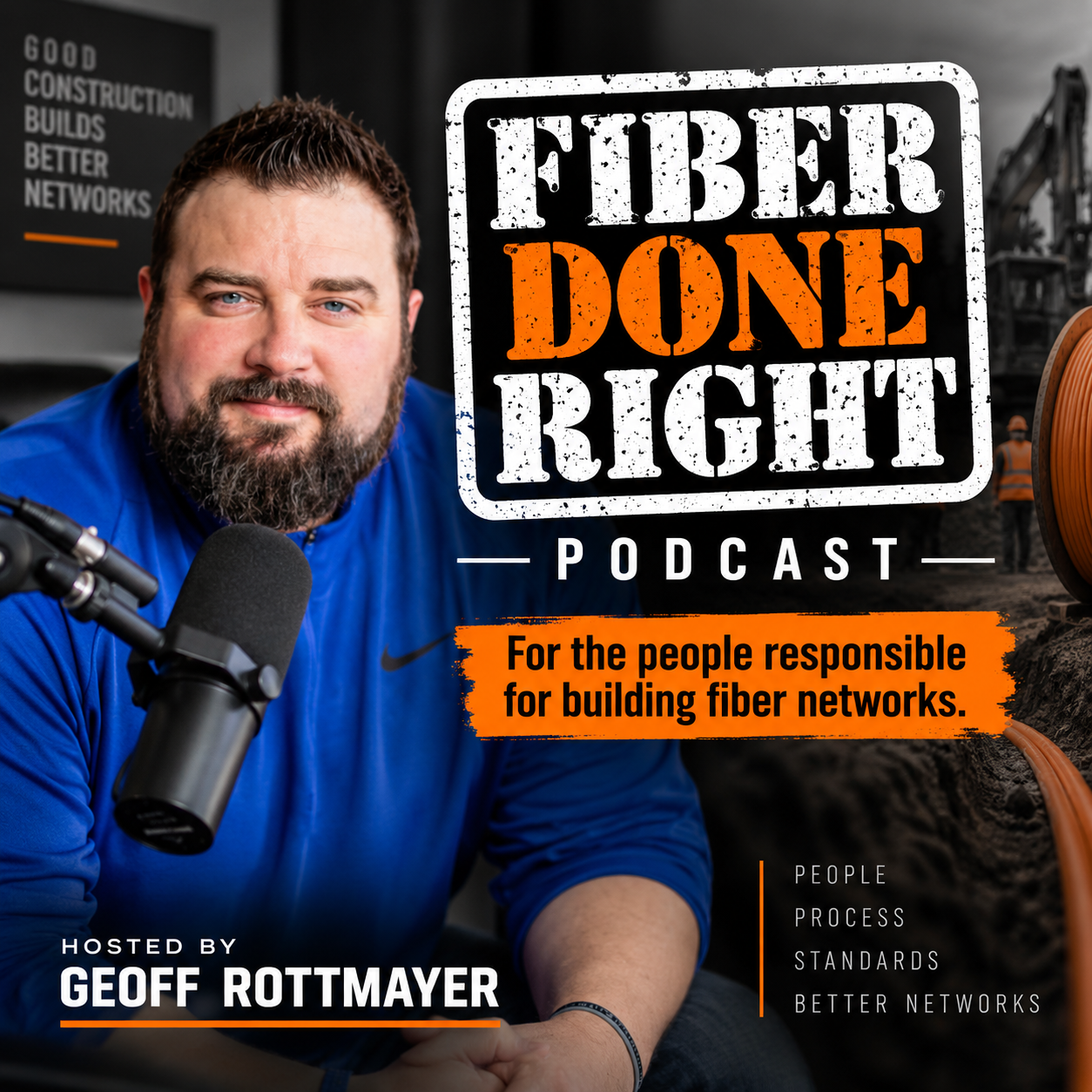
Fiber Done Right Podcast cover art: host Geoff Rottmayer seated at a microphone. Tagline: 'For the people responsible for building fiber networks.' Topics: people, process, standards, better networks.
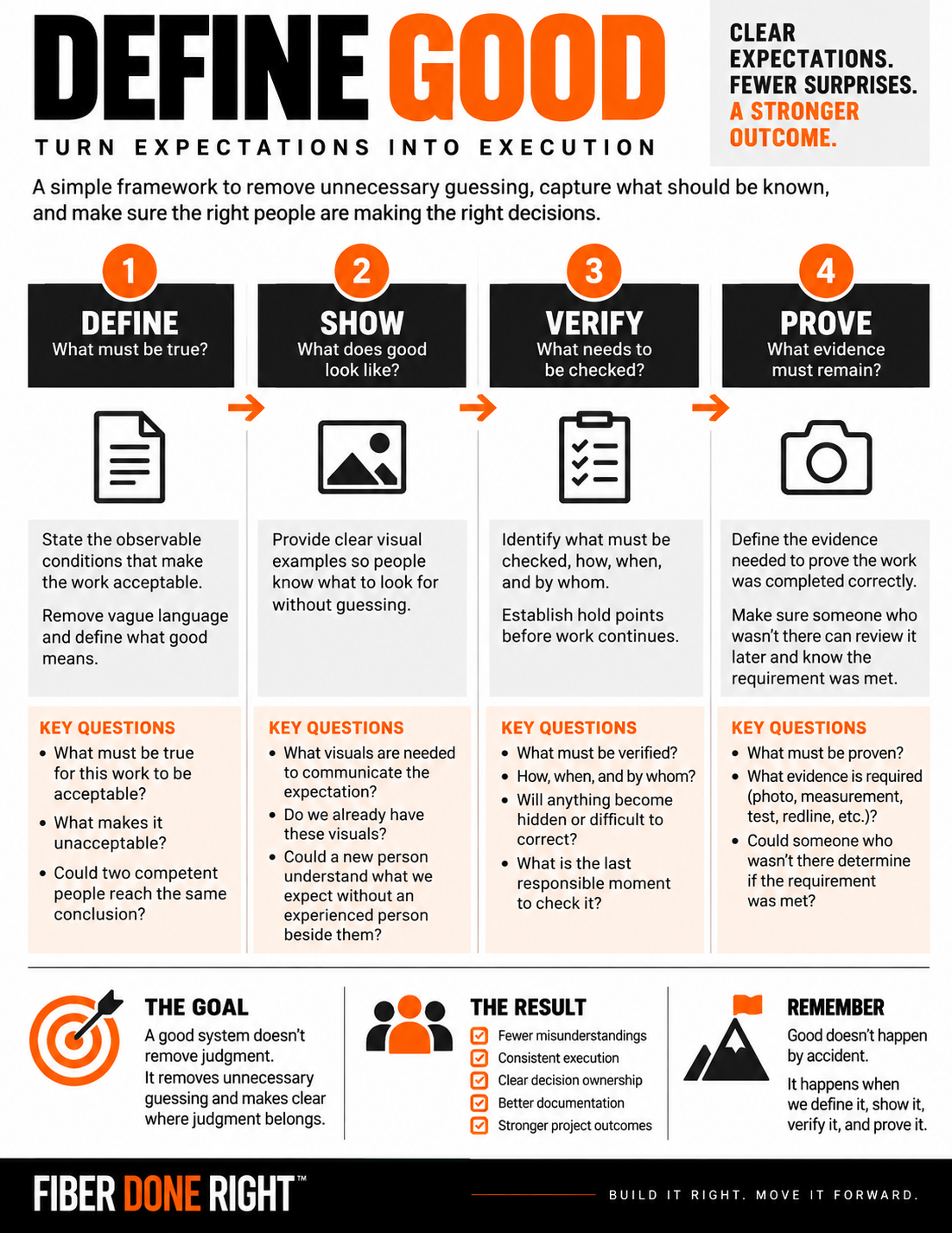
Infographic 'Define Good: Turn Expectations Into Execution.' Four steps: 1 Define (what must be true), 2 Show (what does good look like), 3 Verify (what needs to be checked), 4 Prove (what evidence must remain), each with key questions. Good doesn't happen by accident; it happens when we define it, show it, verify it, and prove it.
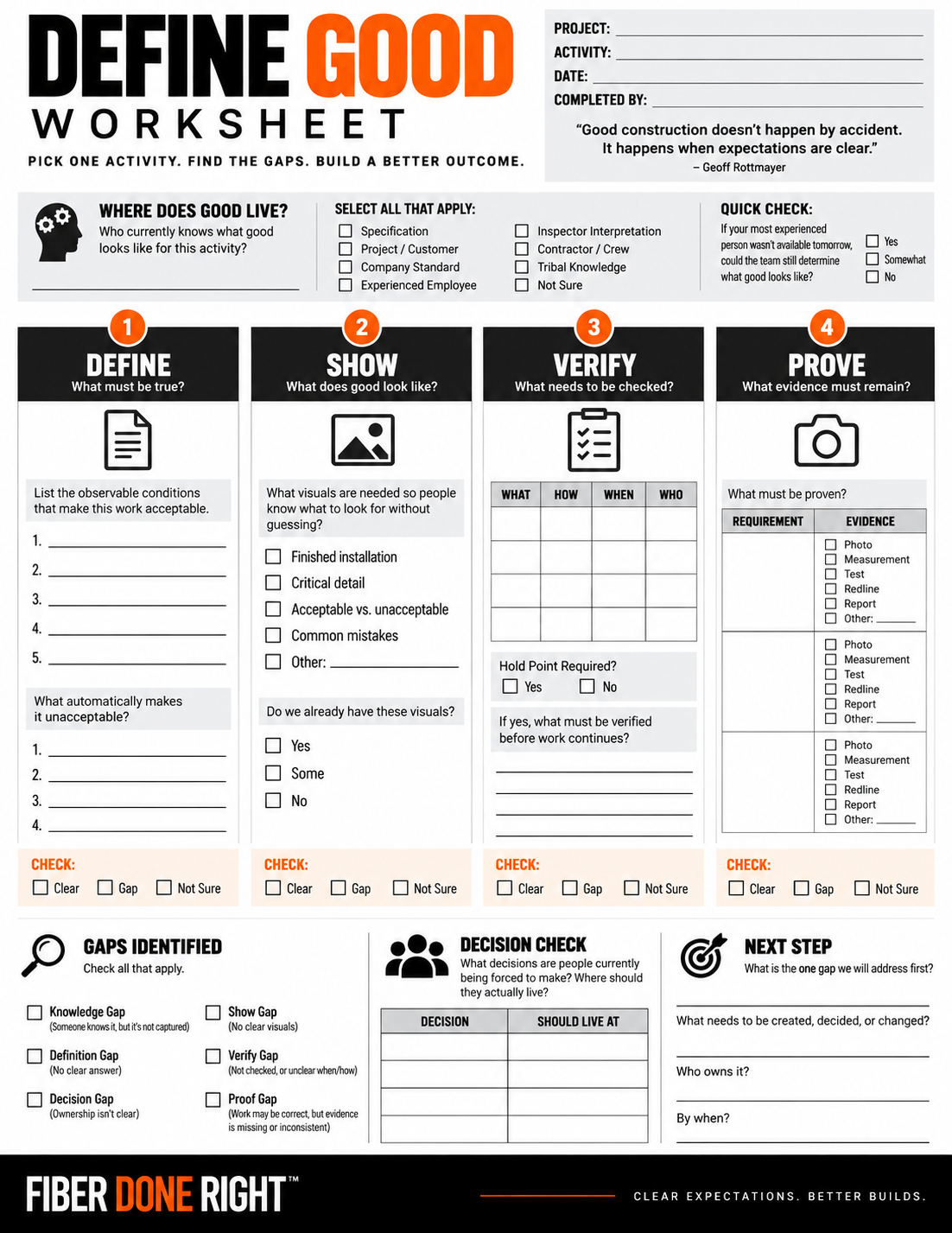
Blank Define Good Worksheet (Fiber Done Right): pick one activity, find the gaps, build a better outcome. Columns for Define, Show, Verify, and Prove, plus sections for where good currently lives, gaps identified, a decision check, and the next step.
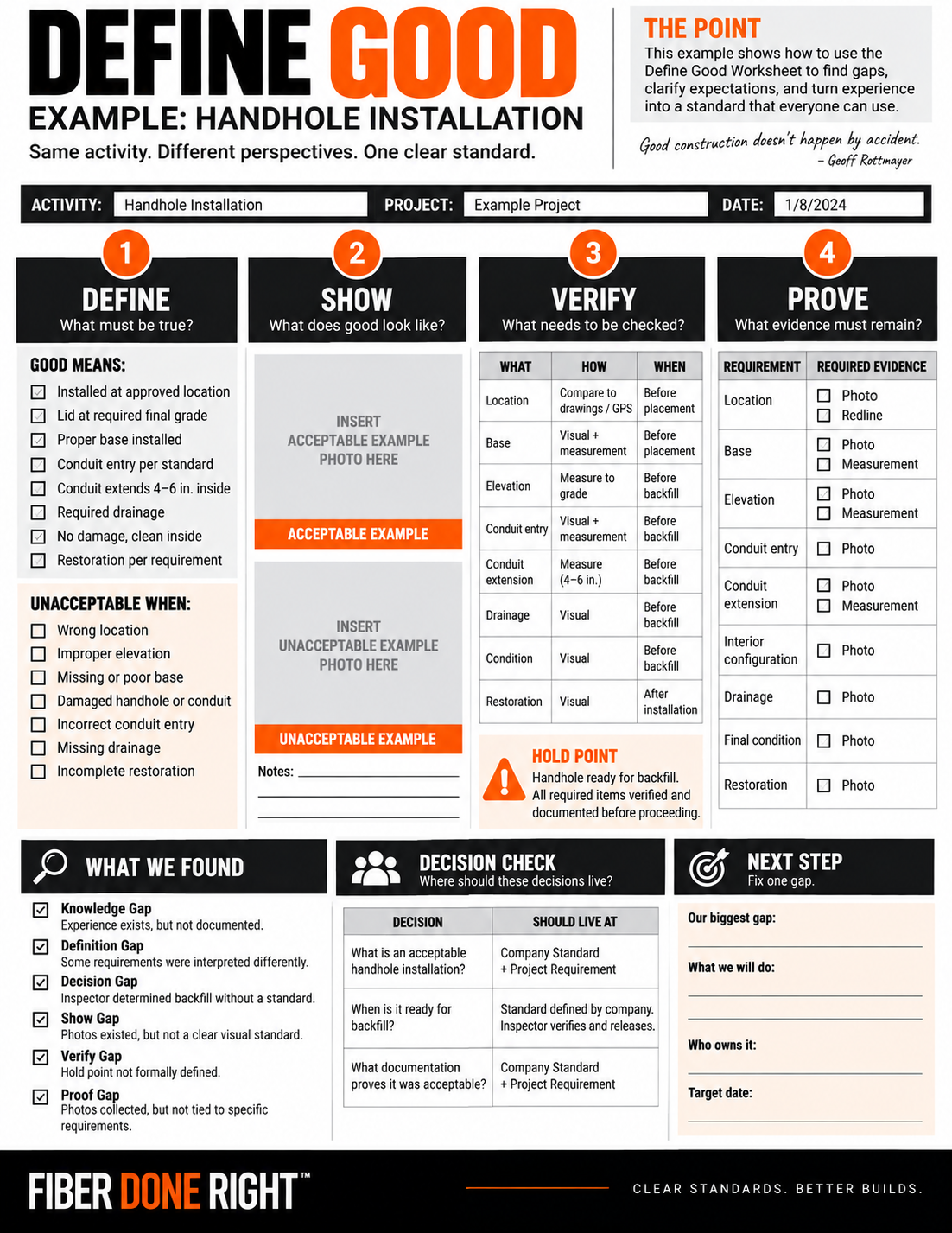
Filled-in example of the Define Good Worksheet for a handhole installation. Define lists what good means (installed at approved location, lid at required final grade, proper base, conduit entry per standard, conduit extends 4 to 6 inches inside, required drainage, no damage, restoration per requirement) and what makes it unacceptable. Verify sets checks before backfill with a hold point, and Prove lists the photo and measurement evidence required for each requirement.
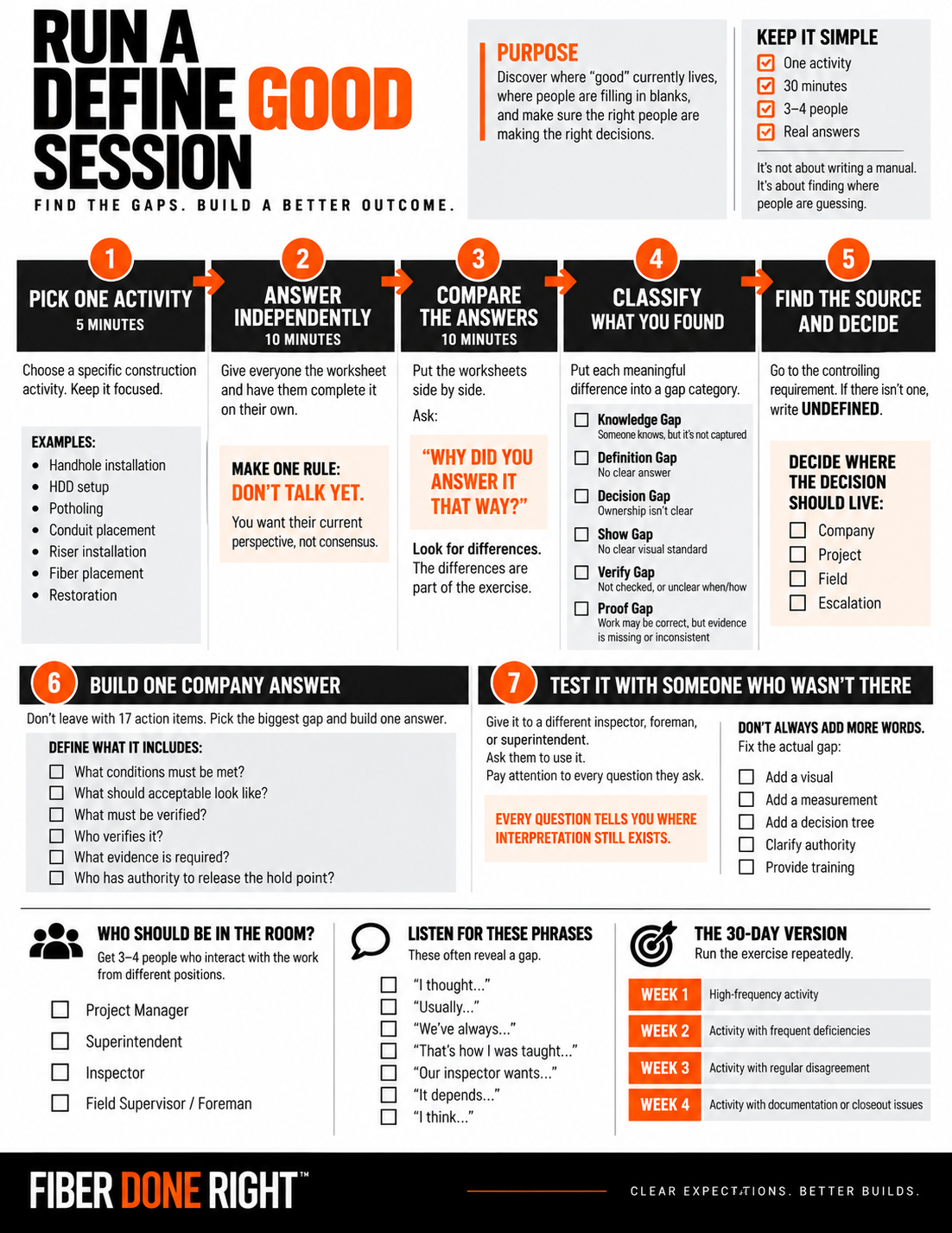
Guide titled 'Run a Define Good Session: find the gaps, build a better outcome.' Seven steps: pick one activity, answer independently (one rule: don't talk yet), compare the answers, classify what you found (knowledge, definition, decision, show, verify, or proof gap), find the source and decide where the decision should live, build one company answer, and test it with someone who wasn't there.

Developing inspectors who can verify work like this is the purpose of the Inspector Development System.

Related reading: What Does Good Look Like? and The Route Is Giving You Clues.
Leave a Comment

Your email address will not be published. Required fields are marked *

Scroll to Top