
Your company’s standards, procedures, responsibilities, and field tools, developed into one operating system your people can understand, follow, and use.
Valor Services builds operating systems around the way your fiber construction company actually works. We help establish what needs to happen, who is responsible, how decisions are made, and what evidence is required to verify the work.
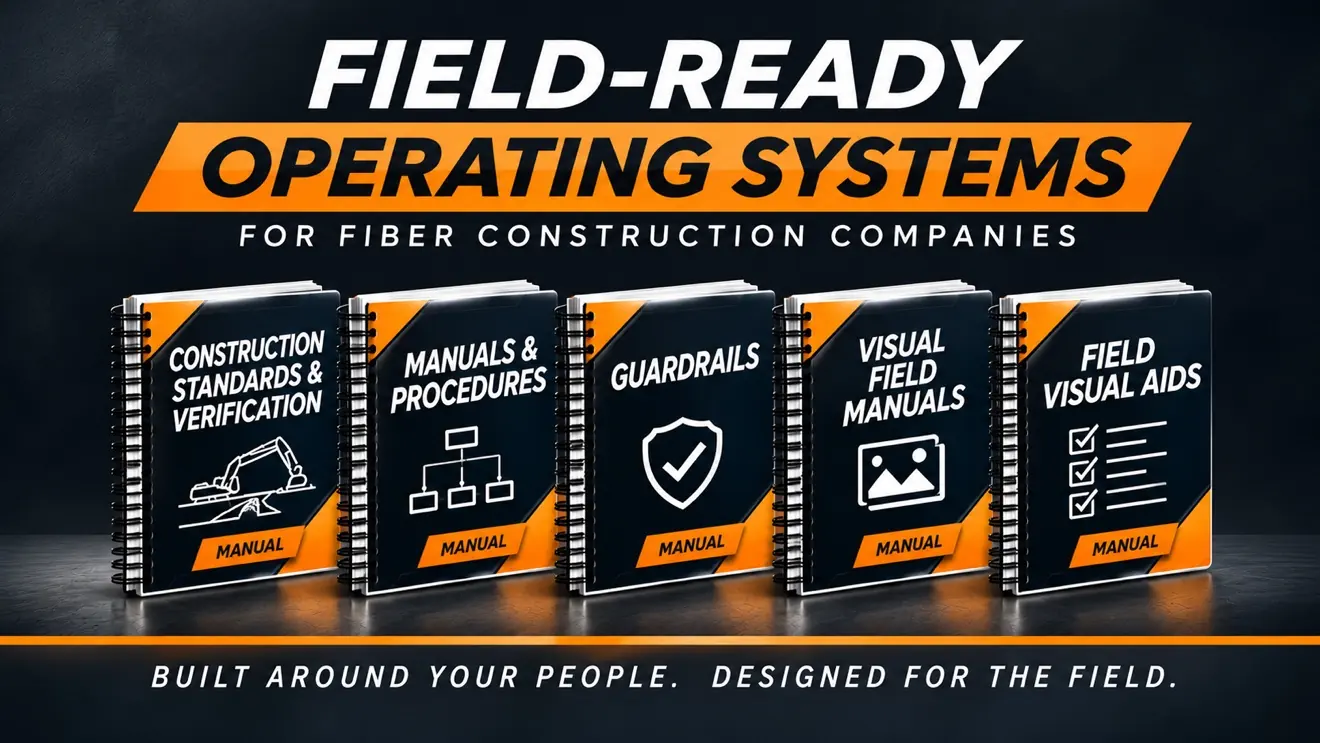
What acceptable work is, and how it gets verified.
The documented workflows, responsibilities, and records the work runs on.
Who can decide, where work stops, and what happens next.
Visual instruction employees can understand and apply.
Cards, diagrams, and decision guides used at the point of work.
The full explanation of each component is in The Five Components below.
Think about everything that has to happen for a fiber construction project to run properly. Crews need to understand the construction requirements. Supervisors need to know what they are responsible for. Inspectors need to know what to verify. Managers need accurate information to make decisions. Contractors need to understand the expectations before starting work.
All of those responsibilities are connected. When the company has no consistent way to handle them, employees rely on their own experience, previous projects, and the people they trust to give them answers.
A Field-Ready Operating System establishes a common way for those responsibilities to be carried out. It connects five things: the requirements that define acceptable work, the procedures people follow, the boundaries for making decisions, the materials that explain how the operation works, and the tools employees use during their daily activities. The system is built around your company’s actual work, existing requirements, people, and responsibilities.
Consider an underground fiber construction crew installing conduit along an approved route. During the work, the crew encounters a condition that does not match the approved construction requirements. The foreman needs to determine what to do. The inspector needs to understand what can be accepted. The construction manager may need to make a decision. Somebody must document the condition so the project record reflects what happened. A defined operating system gives each person a way to handle that situation:
The crew and inspector reference the applicable approved construction standard, drawing, specification, or other controlling project requirement. They establish what the work was supposed to meet.
The responsible person checks what was installed or encountered. The condition is compared with the applicable requirement, using the verification method established for that work.
The record identifies the location, condition, applicable requirement, supporting evidence, and any action needed. Photographs, measurements, and other records are collected when required.
The applicable requirement and established decision rules determine whether the crew can continue, whether additional verification is needed, or whether the affected work must be held.
The system establishes which decisions the foreman, inspector, construction manager, or another authorized person can make. Employees know when to communicate the condition and who must approve the next action.
The responsible person checks the completed action against the applicable requirement. The result is documented, and the appropriate authority determines whether the issue can be closed.
Work resumes only after the required verification is complete and authorization is given, where applicable.
The condition, decision, supporting evidence, and final disposition become part of the project record. The same approach can be applied to employee development, contractor onboarding, project preparation, inspection, documentation, and closeout.
Operational problems often become visible through the same situations happening repeatedly. The purpose of developing an operating system is to identify where the company’s requirements, responsibilities, decisions, or processes need to be established or improved.
One crew follows the approved construction requirements. Another follows what worked on a previous project. A third waits for the superintendent to explain what to do. The difference becomes visible when similar conditions are handled differently across projects.
What the system addresses: Common construction standards, documented procedures, defined decision authority, and verification requirements.
A problem is identified, but the crew, inspector, supervisor, and project manager have different understandings of who is responsible for resolving it. Questions move between people while the work waits.
What the system addresses: Defined responsibilities, authority boundaries, communication procedures, escalation rules, and required records.
Two employees hired for the same position receive different instructions because they work with different supervisors. One is released to work independently after demonstrating the required skills. Another is assigned work without a clearly documented determination of readiness.
What the system addresses: Role expectations, development pathways, supervised field application, competency verification, and authorization requirements.
A contractor mobilizes before everyone has confirmed the applicable standards, documentation requirements, communication process, and responsibilities. Disagreements appear after work is already underway.
What the system addresses: Contractor onboarding procedures, project readiness records, construction expectations, oversight workflows, and escalation processes.
An inspector identifies a problem. The contractor corrects it. The project moves forward. Later, the same issue appears on another crew or project. Previous findings have not been turned into a consistent operating requirement or communicated through the appropriate process.
What the system addresses: Inspection standards, deficiency records, corrective action procedures, verification, and methods for communicating recurring issues.
One project starts with clear responsibilities, approved documents, reporting requirements, and communication procedures. Another begins while important decisions are still being worked out. The company has no consistent process for determining whether a project is ready to execute.
What the system addresses: Project setup procedures, readiness checks, responsibility assignments, document requirements, and accountability records.
Construction is reported complete, but required records are missing or inconsistent. Questions arise about installed quantities, corrections, test records, redlines, or whether the work has been accepted. The project team must reconstruct information that should have been collected and reviewed during construction.
What the system addresses: Documentation standards, inspection records, correction tracking, closeout procedures, and defined acceptance responsibilities.
The same experienced superintendent, inspector, or construction manager answers questions that should already have a defined company answer. When that person is unavailable, decisions slow down.
What the system addresses: Written standards, documented workflows, decision guides, role development, and accessible field references.
The starting point is understanding the problem. Each company has different requirements, people, existing processes, and operating conditions. An assessment helps determine which problems are present, what may be causing them, and which parts of an operating system need attention.
A Field-Ready Operating System is developed using five components. Each component serves a specific purpose. Together, they establish what is required, how work is performed, how decisions are controlled, how employees learn the process, and what information they use in the field. The materials included in a company’s system depend on its operational needs and the agreed scope.
Construction standards establish the requirements employees and contractors are expected to meet. They may address installation practices, material requirements, inspection points, documentation, testing records, and acceptance conditions, depending on the type of work and the governing project requirements.
Verification establishes how the responsible person determines whether the requirement has been satisfied. A standard must be specific enough for employees to understand what is expected. The associated verification method must identify what needs to be checked and what evidence is required.
Examples of materials: Inspection Standards Manual; Construction Acceptance Criteria; Documentation and Reporting Standards; Competency Verification Requirements.
Crews use the requirements to understand what they must accomplish. Inspectors use them to determine what needs verification. Supervisors and managers use the resulting records to review work and make decisions. These standards provide the foundation for the procedures, decision rules, and field references developed in the other components.
A construction standard tells employees what must be achieved. A procedure explains the steps and responsibilities involved in getting there. Manuals and procedures document how activities begin, how work moves between people, what information is required, and how a process is completed.
For example, an inspection procedure may explain how an inspector prepares for the day, verifies the work, documents findings, communicates deficiencies, and completes the required reporting. The same structure can be developed for employee onboarding, contractor readiness, project setup, and other operating activities.
Examples of materials: Inspector Handbook; Inspector Workflow Manual; Contractor Onboarding Procedure; Contractor Oversight Workflow; Employee Development Pathway; Project Setup Procedure.
Employees use procedures to understand the expected sequence of work. Supervisors use them to coordinate responsibilities and check that required steps have been completed. The procedures connect the company’s standards to its daily activities.
Employees regularly encounter conditions that require judgment. Some decisions fall within their assigned responsibility. Others require additional verification, management review, or approval from an authorized party. Guardrails establish those boundaries.
They identify who owns a decision, what information must be communicated, when an issue needs to be escalated, and what must happen before the affected work proceeds. Guardrails also help employees recognize when they have reached the limit of their authority.
A Decision and Escalation Guide distinguishes conditions that require work to be held from conditions that can proceed under the applicable standard. It identifies the responsible authority, required communication, verification, and next action. Work resumes only after the required verification is complete and authorization is given, where applicable.
Examples of materials: Roles, Responsibilities, and Authority Matrix; Decision and Escalation Guide; Communication and Escalation Plan; Deficiency and Corrective Action Workflow; Authorization and Release to Role.
Guardrails connect the company’s requirements and procedures to the decisions people make while carrying out their responsibilities.
Some operating requirements are easier to understand when employees can see the work being described. A Visual Field Manual combines written explanations with drawings, diagrams, examples, and organized instructions.
It may show a construction activity, explain a field condition, identify what an employee needs to recognize, or walk through an operating procedure. The purpose is to give employees enough information to understand the subject and apply the relevant requirement.
Examples of materials: Illustrated Inspection Procedure; Visual Construction Requirements Guide; Illustrated Employee Development Instructions.
A new inspector might use a visual manual to understand what a particular installation looks like, what the approved requirement means, and what must be checked. A supervisor may use the same material when explaining the procedure to an employee. Visual Field Manuals support the company’s standards and procedures by making them easier to understand and teach.
Employees cannot reasonably be expected to search through a complete manual every time they need to confirm a routine step. Field Visual Aids provide selected information in a shorter format.
They may include quick-reference cards, diagrams, decision trees, worksheets, or records used during a specific activity. A field aid supports a defined task. It directs the employee to the relevant requirement, decision, or next action.
Examples of materials: Inspection Quick Reference; Field Decision Trees; First-Day Orientation Card; Contractor Project Readiness Record; Employee Development Record.
An inspector may use a quick-reference guide while checking work. A foreman may use a decision tree when an unexpected condition is found. A supervisor may use a development record to document an employee’s progress. These tools connect the complete operating system to daily field application.
A Visual Field Manual explains a subject or process in enough detail for an employee to learn and understand it. A Field Visual Aid provides selected information needed to carry out a task or make a decision. Both draw from the same approved standards, procedures, and decision rules. That connection matters. Employees should not receive different instructions depending on which document they open.
An operating system needs materials that support the people responsible for using it. Valor develops those materials around the requirements and operating processes established for the engagement. The following library shows examples of what may be included in a Field-Ready Operating System.
The important question is whether the materials work together and give employees a clear way to carry out their responsibilities.
Three examples, shown as conceptual samples in the same format as the homepage. Client materials are confidential and are never displayed.
Work type: [assigned work type]
Verify: each finding is checked against the standard, not against memory.
Defines the applicable inspection requirements, what needs to be checked, how verification is performed, and what evidence must be recorded.
CONCEPTUAL SAMPLEHelps employees recognize when they can proceed under an established requirement, when additional review is needed, and who must authorize the next action.
CONCEPTUAL SAMPLEOrganizes the requirements, supervised activities, progress checks, and authorization steps involved in developing an employee for a specific role.
CONCEPTUAL SAMPLEConsider an inspector reviewing an underground conduit installation before the work is concealed. The inspector identifies a condition that needs to be checked against the approved construction requirements. Each component of the operating system has a job.
The inspection standard identifies the applicable construction requirement and what must be verified before the work is accepted. The inspector establishes what the installation must meet and which evidence is needed.
The inspection procedure establishes how the inspector reviews the work, records the condition, communicates findings, and follows the required verification process. The responsible employees understand the sequence of activities.
The decision rules identify whether the condition can be addressed within established authority, whether further review is required, or whether the affected work must be held. The responsible person follows the required communication and approval process.
The visual manual helps the inspector and crew understand the condition through drawings, examples, and explanations tied to the applicable standard. Employees have a common reference for interpreting the requirement.
The inspector uses the appropriate quick reference or field record to confirm the required checks, capture the necessary information, and document the next action. The resulting records support review and closeout.
The connection matters. The standard defines the requirement. The procedure establishes the workflow. The guardrail controls the decision. The visual manual explains the work. The field aid supports the person carrying it out. Each part must agree with the others. When the applicable requirements, procedures, decision authority, and records are connected, employees have a defined way to handle the work. That is how the operating system becomes part of the operation.
Valor follows six stages to develop and implement a Field-Ready Operating System. The work is organized around the agreed scope, the company’s existing requirements, and the employees who will use the system.
Valor reviews the relevant operating activities, responsibilities, existing documents, recurring problems, and applicable requirements. The company identifies the people involved, explains how the work is currently performed, and provides the available standards, procedures, and records needed for review. Together, we establish which operational problems need attention and what the system may need to address. The result is a defined understanding of the current operation and the issues the proposed system must consider.
Valor develops the proposed system structure around the responsibilities, requirements, workflows, and decisions identified during diagnosis. The company reviews the proposed approach, confirms operational requirements, and identifies the people responsible for providing information and approving materials. The design establishes the intended components, deliverables, responsibilities, and implementation approach within the agreed scope. This provides the direction for development.
Valor prepares the standards, manuals, procedures, guardrails, visual instructions, and field tools included in the approved scope. The company’s designated representatives provide the necessary project information, review materials for operational accuracy, and confirm the requirements and authority assignments that apply. Documents and tools are reviewed for consistency so employees receive aligned instructions across the system. The result is an approved set of operating materials ready for the next stage of preparation and application.
Valor works with the relevant employees, supervisors, and managers to explain the system’s requirements, procedures, responsibilities, and tools. The company makes the appropriate personnel available and identifies how the materials will be introduced within its operation. Employees learn where to find information, how to follow the defined processes, and when decisions require additional review or authorization. The objective is to establish the understanding needed for implementation.
Valor supports the company as the approved processes and tools are introduced into actual work. The company’s managers and supervisors carry out their assigned responsibilities, direct employees, and establish the internal practices needed to use the system. Implementation may include applying workflows, using field records, following decision rules, and checking that employees understand their responsibilities. The result is a system being used in the activities for which it was developed.
Valor reviews the agreed implementation requirements and available evidence to evaluate whether the system is being applied as intended. The company provides relevant records, feedback, and access to the responsible personnel within the agreed scope. Gaps are identified, adjustments are considered, and the company establishes how continued use and maintenance will be managed. Verification helps determine whether the operating system has been put into use and where further attention may be needed.
The work continues inside your company. An operating system needs responsible people to maintain it. As construction requirements, responsibilities, or company practices change, the appropriate documents and tools may need review. The company should have defined responsibility for maintaining approved materials, communicating changes, and checking continued use. That responsibility is part of making the system sustainable.
The five configurations apply the Field-Ready Operating System to different operating responsibilities. Each uses the same five-component architecture, with materials selected according to the work being addressed.
Inspection quality depends on understanding the applicable requirements, recognizing conditions, making authorized decisions, and documenting the work. An Inspector Development configuration establishes the responsibilities, standards, workflows, decision rules, and development requirements needed to support the inspection function.
Inspectors, lead inspectors, construction managers, project managers, and other personnel responsible for inspection oversight.
Inspection Standards Manual, Inspector Handbook, Inspector Workflow Manual, Inspection Decision Trees, Documentation and Reporting Standards, and Inspector Competency Verification.
The intended result is a defined inspection process that employees can learn, apply, and verify.
Explore Inspector Development →Contractors must understand the requirements that apply to their assigned work, how they are expected to communicate, and what records they must provide. A Contractor Onboarding configuration establishes the process for introducing those expectations and confirming readiness.
Contractor managers, construction managers, project managers, field supervisors, and designated contractor representatives.
Contractor Onboarding Procedure, Contractor Project Readiness Record, Construction Standards and Expectations, Communication and Escalation Plan, and Contractor Oversight Workflow.
The intended result is a consistent process for preparing contractors to work under the company’s defined requirements.
Explore Contractor Onboarding →New employees need to understand what their position requires, which activities they must learn, and how their readiness will be evaluated. An Employee Development configuration establishes the process for introducing, developing, evaluating, and authorizing employees for assigned responsibilities.
New employees, supervisors, department managers, designated evaluators, and personnel responsible for employee development.
Role Expectations and Responsibilities, Employee Development Pathway, First-Day Orientation Card, Employee Development Record, Competency Verification Requirements, and Authorization and Release to Role.
The intended result is a repeatable development process with documented expectations and readiness decisions.
Explore Employee Development →A project requires more than an assigned crew and a start date. The responsible people need to understand the applicable requirements, approved information, communication process, reporting expectations, and decision authority. A Project Setup configuration establishes the process for preparing and confirming those responsibilities before execution.
Project managers, construction managers, field supervisors, inspectors, and other personnel assigned project responsibilities.
Project Setup Procedure, Project Readiness Record, Roles and Responsibilities Matrix, Communication Plan, Required Document Register, and Project Accountability Workflow.
The intended result is a defined approach to project preparation and accountability.
Request an Operational Systems Assessment →Some operational needs do not fit entirely within a standard configuration. A company may need to establish a consistent process for documentation, corrective action, closeout, management decisions, or another defined responsibility. A Custom Operational System is developed around the particular activity, people, requirements, and decisions involved.
The employees, supervisors, managers, and designated decision-makers responsible for the affected operation.
Operating Procedures, Responsibility Matrices, Decision Guides, Documentation Standards, Verification Records, and Field Reference Tools.
The intended result is a system that supports the specific operational responsibility identified in the approved scope.
Explore Operational Systems →One operating-system approach. The starting point may be inspection, contractors, employees, project setup, or another operational responsibility. The development approach remains consistent: establish requirements, define responsibilities, document processes, prepare employees, implement the tools, and verify their use.
The final deliverables are established during the design and scope approval process. Depending on the engagement, the company may receive the following materials and implementation support.
The standards, manuals, procedures, and other documents developed or adapted for the agreed operating responsibilities. These materials establish the requirements and processes the company has approved for use.
Documented responsibilities and authority boundaries that help employees understand what they own, which decisions they can make, and when additional review is required.
Quick references, decision guides, visual materials, worksheets, and records designed to support the activities included in the system. The tools are connected to the approved requirements and procedures.
Instructions and supporting materials used to help employees understand the system and their responsibilities. These may include visual explanations, role-specific guidance, and materials for introducing procedures and field tools.
Support for introducing the system into the company’s agreed operating activities. The specific activities and responsibilities are defined in the engagement scope.
Defined ways to check whether requirements are being followed, decisions are documented, and the system is being applied as intended. The appropriate records depend on the operation and the verification requirements established for the engagement.
The agreement establishes which materials are delivered, how the company may use them, and any applicable licensing, maintenance, or update terms. Those rights and obligations are defined by the contract.
Maintaining the system after implementation. A Field-Ready Operating System needs an assigned place within the company’s ongoing operation. Someone must be responsible for maintaining the approved documents, reviewing changes, communicating updates, and checking whether the processes remain in use. When requirements change, the related procedures, decision guides, and field references may need to be updated together. Employees also need to know where the current approved materials are located and which version applies to their work. These responsibilities should be established as part of implementation. The objective is for the company to have a defined operating system that its people can continue using and maintaining under the agreed terms.
Valor Services brings practical fiber construction experience to the development of operating systems. The work begins with understanding what employees face in the field, what supervisors are responsible for, how construction requirements are applied, and what managers need to verify. That field perspective shapes how the materials are organized, explained, and introduced into the operation.
Valor has worked with people and teams at DirectLine Communications, Niels Fugal Sons, Trimble, AT&T, Glenwood Fiber Company, AFL, and Central States Utilities.
The goal of every engagement is to develop a system suited to the company’s actual work, people, and approved requirements.
Built Around Your People. Designed for the Field.
You may already know where your company is losing time. The same questions keep coming back to your supervisors. Different crews handle the same work differently. New employees take longer to become ready. Required records are missing when a project reaches closeout.
An Operational Systems Assessment gives us a structured way to examine those problems. We’ll discuss how your company operates today, where responsibilities and decisions become unclear, what problems keep returning, and how those conditions affect rework, delays, and management time. We’ll review the standards, procedures, records, and tools your company already uses. From that conversation, we can identify likely causes, the consequences of the current process, and what a Field-Ready Operating System may need to cover. You’ll have a clearer understanding of the operational issues worth addressing and whether Valor is the right company to develop the system.
Built Around Your People. Designed for the Field.